The News from Windflower Farm
As most of you know, we are having an open house at the farm at the end of the month, and you are invited. A farm tour, potluck dinner, bonfire and camping (or lodging at a nearby B&B) are on tap. The open house will take place on the weekend of June 29th and 30th. Details can be found Windflower Farm’s Open House Registration (wufoo.com). A reservation is required for our planning purposes (meals, etc.). The deadline for that is June 16th. We hope you can join us.
What’s in the share?
- Summer squash or zucchini or cucumbers
- Kohlrabi
- Green frilly cutting lettuce
- Swiss Chard
- Redleaf kale
- Onions
- Garlic scapes
The fruit share will be strawberries from Yonder Farm
What’s new on the farm?
Cold weather has slowed our squashes and cucumbers, but they are coming along. I think they’ll really begin to produce fruit in week #4, following the heat that is expected later this week.
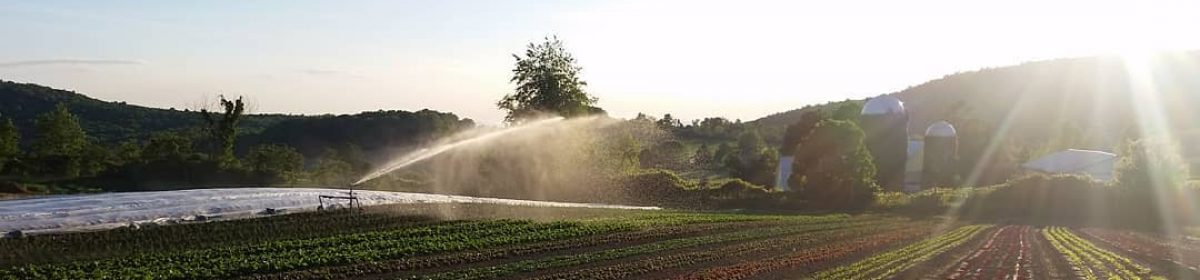
Progress report: Last week, we planted 24,000 sweet potato slips, four 350’ beds of eggplants, our tenth sweet pepper tunnel, and chiles. We hilled potatoes, cultivated cabbage and broccoli, and trellised cucumbers and tomatoes growing in greenhouses. And, because it had become dry, we irrigated virtually the entire farm (just in time for a good rain).
Our goal for this week is to finish transplanting winter squashes – the acorns, butternuts, delicatas and pie pumpkins that will arrive in your fall shares. We also want to plant a third succession of sweet corn, a second round of cabbage, and more lettuce, radicchio, kale and other greens. And we want to figure out how to use a new tool – a weeder for mulched crops called a “trim cone” that a man from Wisconsin made for us.
The biggest project on the horizon, and one we won’t get to until next week, is hand weeding onions. We have perhaps an acre of them, or some twenty-four 350’ beds, on bare ground. We are not fans of agricultural plastic, although we make use of it where necessary, and have opted to avoid it in the case of our fall onion crop. The downside is that, if we cannot keep up with tractor cultivation, as has become the case this year, the weeds will get away from us. It has become an all-hands situation.
The upside of a weeding chore like this one is that it provides the conditions for good conversation. “Getting into the weeds” has its origins in the garden. The work is easy, if sometimes hot and buggy. And it’s gratifying – progress is gauged by looking back down the beds, and because we work in a pack, progress is rapid. All that’s left is for someone to begin talking. When a former employee returns for a visit, we are invariably taken back to a crop in desperate need of weeding, the group of us who took it on, and what we talked about.
Have a great week, Ted
 Central Brooklyn CSA