The News from Windflower Farm
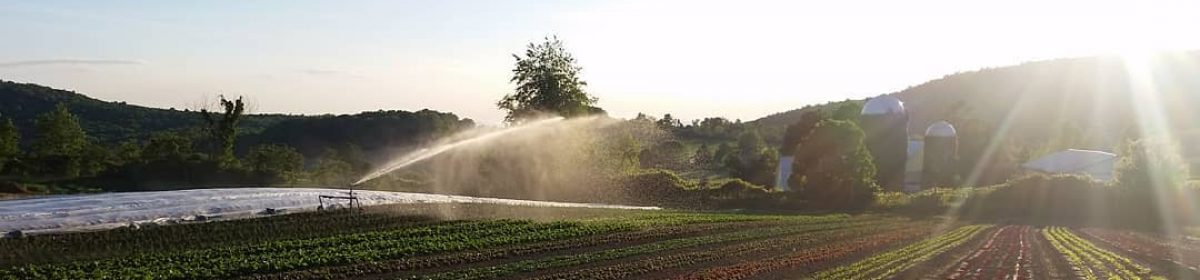
It rained! A total of an inch of rain fell over the course of three or four days last week, giving the irrigation team a chance to turn their attention to cultivation. Our two electric cultivating tractors have seen a fair amount of action so far this spring, and things don’t look bad. One is set up to tackle the weeds in direct-seeded crops like radishes, beets, and arugula. The other is set up for transplants – thelettuces, kales and cabbages in our crop mix. A third electric tractor is in the final stages of its build. We haven’t committed it to a function yet. We might use it to seed or to spray or to weed something specific, such as the pathways between mulched beds or hilled crops like potatoes, leeks and corn. Or we might turn it into a transplanter. If we are to realize the goal of reducing diesel fuel consumption on the farm, we should probably focus on transplanting – our biggest user of fuel.
What you’ll get this week
- Yellow onions, bunched
- Green oakleaf lettuce
- Bok Choy
- Red radishes, bunched
- Garlic Scapes
- Mixed kales, bunched
- Chard, bunched
- The fruit share will be strawberries from Yonder Farm.
News from the farm
Last week, we were asked how we deal with waste. Like most businesses, we generate too much of it. It’s a big topic, but plastics clearly top the list. Here are a few things we’ve been doing to address waste on our farm. We use the three Rs, of course. In the Reduce category,we have been working to eliminate our use of black plastic mulch – a standard in vegetable farming. We have eliminated mulch in all but our first Cucurbits, our few field-grown Nightshades, and our sweet potatoes. Next year, we’ll focus on alternatives to plastics in sweet potatoes. In our return to tubs at most of our sites, we’ve significantly reduced our use of boxes and plastic inserts. When we’ve purchased compost, we’ve transitioned from small plastic compost bags to durable supersacks (1 sack equals 40 bags). Beyond plastics, it was a pleasant surprise to find that our new delivery truck uses perhaps 20 percent less diesel than our old one. And in our transition to more and more drip irrigation, we’ve significantly reduced our water consumption (but we’ve used more drip tape).
In the Reuse category, we have been using much of last year’s drip tape again this year, thanks to a small retrieval tool made by Nate. We’ve also reused most of last year’s row cover, and all of last year’s tubs. And we’ve reused the plastic on many of our greenhouses for so long that there is a risk of some of it blowing off in the next wind. We Recycle, too, of course. Spent boxes, for example, go to thetransfer station (although I have no idea what becomes of them afterwards). Spent pallets become the fuel that heats our winter workshop. And vegetable waste is recycled by composting it first, and then spreading it on the farm. We still have work to do, but we’re working on it!
Have a great week, Ted

 Central Brooklyn CSA